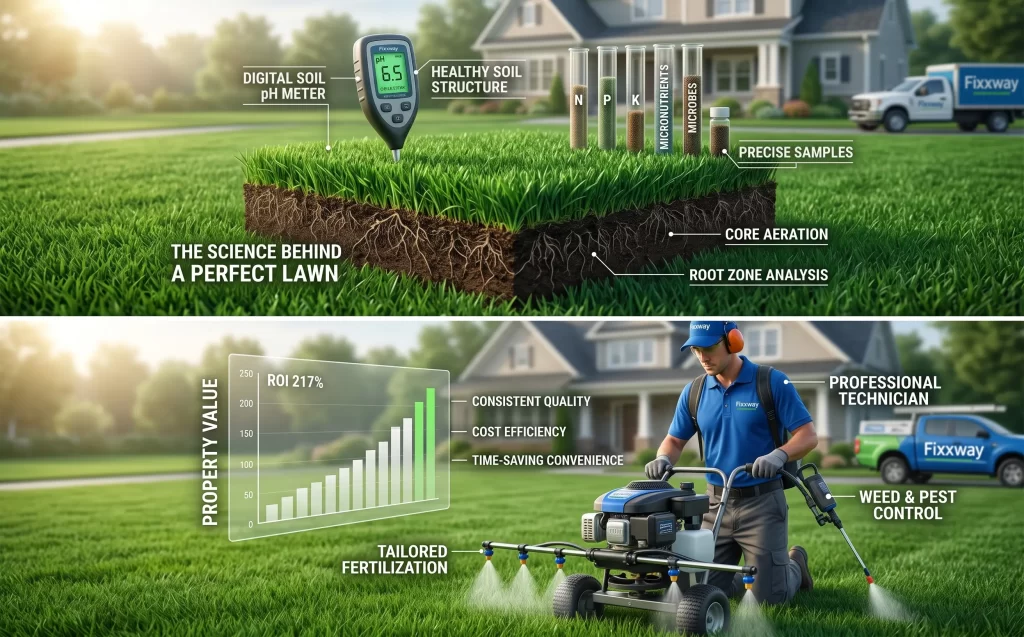
A healthy, lush lawn doesn’t happen by accident. Behind every perfectly manicured yard is a precise combination of soil science, seasonal timing, and commercial-grade equipment that most weekend warriors simply don’t have access to. Understanding the science behind professional lawn maintenance can help you make smarter decisions about your property — and your budget.
Why Your Florida Lawn is More Complex Than It Looks
At first glance, grass appears simple. It’s just grass, right? But beneath the surface lies a surprisingly complex ecosystem. A healthy lawn contains millions of microorganisms per square foot, each playing a critical role in breaking down organic matter, fixing nitrogen, and creating the nutrient-rich environment that keeps your turf thick and green. This is exactly why DIY methods often fail, and why professional lawn maintenance in Tampa is crucial for lasting results.
When this underground ecosystem is disturbed — by compaction, drought, poor drainage, or incorrect fertilization — the visible effects can be dramatic. Thin patches, yellowing, invasive weeds, and pest infestations are all symptoms of a deeper imbalance that no amount of consumer-grade lawn spray can permanently fix.
The Three Pillars of Turf Health
- Soil Composition:The right balance of sand, silt, clay, and organic matter determines how well your roots can penetrate and access water and nutrients.
- Nutrient Availability:Nitrogen (N), phosphorus (P), and potassium (K) must be present in the correct ratios — and applied at the right times of year — to promote healthy growth without burning the turf.
- Water Penetration:Compacted or thatch-heavy soil prevents water from reaching the root zone, leading to shallow roots that are highly susceptible to drought stress and disease.
"90% of lawn problems trace back directly to poor soil preparation and incorrect fertilization timing. Fix the soil first, and the grass will take care of itself."
— FixWay Certified Turf Management Specialist
Core Aeration: The Most Underrated Service in Lawn Care
If there’s one professional service that delivers the most immediate, visible impact on lawn health, it’s core aeration. Unlike dethatching or simple overseeding, core aeration physically removes small plugs of compacted soil — typically 2 to 3 inches deep — creating channels for oxygen, water, and fertilizer to reach the root zone directly.
The ideal time to aerate varies by grass type and climate zone. In Florida’s warm climate, most warm-season grasses like St. Augustine, Bermuda, and Zoysia benefit most from aeration during late spring through early summer, when the grass is actively growing and can recover quickly.
Signs Your Lawn Needs Core Aeration Now
- Water pools or runs off quickly instead of soaking in after irrigation
- The lawn feels spongy or has a thick layer of thatch above the soil line
- Grass appears thin and pale despite regular watering and fertilization
- Heavy foot traffic areas look consistently stressed or bare
- A screwdriver or soil probe is difficult to push 2 inches into the ground
FixWay Pro Tip
Always overseed immediately after core aeration. The open channels created by the tines provide the perfect seed-to-soil contact needed for germination, increasing seed uptake rates by up to 60% compared to seeding on a non-aerated surface.
The Commercial Equipment Advantage
One of the most significant differences between a professional lawn service and a DIY approach is the quality and calibration of equipment. Consumer-grade mowers are designed for convenience, not turf science. They cut at inconsistent heights, dull blades tear rather than cut grass blades cleanly, and they lack the weight distribution needed for a truly even cut.
FixWay’s verified professionals use commercial-grade equipment that is regularly maintained and calibrated to meet manufacturer specifications. This means:
- Consistent cutting height across the entire lawn surface with zero scalping
- Sharp blades that make clean cuts, reducing disease entry points
- Proper weight distribution that avoids compacting wet soil
- Professional-grade fertilizer spreaders that ensure uniform nutrient application
Building a Seasonal Maintenance Program
The most effective approach to lawn health is a proactive, year-round maintenance program rather than reactive treatments. In the Tampa Bay area, a well-designed program typically follows the natural growth cycles of warm-season grasses:
Spring (March–May): Soil testing, pre-emergent weed control application, first fertilization round with nitrogen-heavy formula to support green-up. Core aeration and overseeding for thin areas.
Summer (June–August): Irrigation system calibration and adjustment, mowing frequency increase, pest and disease monitoring. Potassium applications to strengthen drought tolerance.
Fall (September–November): Transition fertilization, second aeration round, overseeding with ryegrass for winter color, pre-emergent for winter weeds.
Winter (December–February): Reduced irrigation, weed monitoring, equipment maintenance. Planning and budgeting for the following spring program.
"Homeowners who invest in a year-round professional maintenance program consistently see 20–40% lower costs over a 5-year period compared to those who address lawn problems reactively."
— FixWay Annual Homeowner Study, 2025
Conclusion: The ROI of Professional Lawn Care
A well-maintained lawn isn’t just aesthetically pleasing — it’s a measurable financial asset. Studies consistently show that professional landscaping and lawn maintenance can increase property value by 10–15% and significantly reduce time-on-market when selling. For a typical home in the Tampa Bay area, that can represent tens of thousands of dollars in additional equity.
More importantly, the preventive approach of professional maintenance — catching pest infestations early, maintaining proper soil health, and applying nutrients at the right times — virtually eliminates the need for expensive remediation treatments that can cost 3–5 times more than routine maintenance.